Social media banned under 13: the Italian law and its three obstacles
Italy's governing majority wants to ban social media under 13 and tie accounts to parents until 16. The intent is clear. But three legal obstacles, one constitutional and two European, could keep the rule on hold for months.
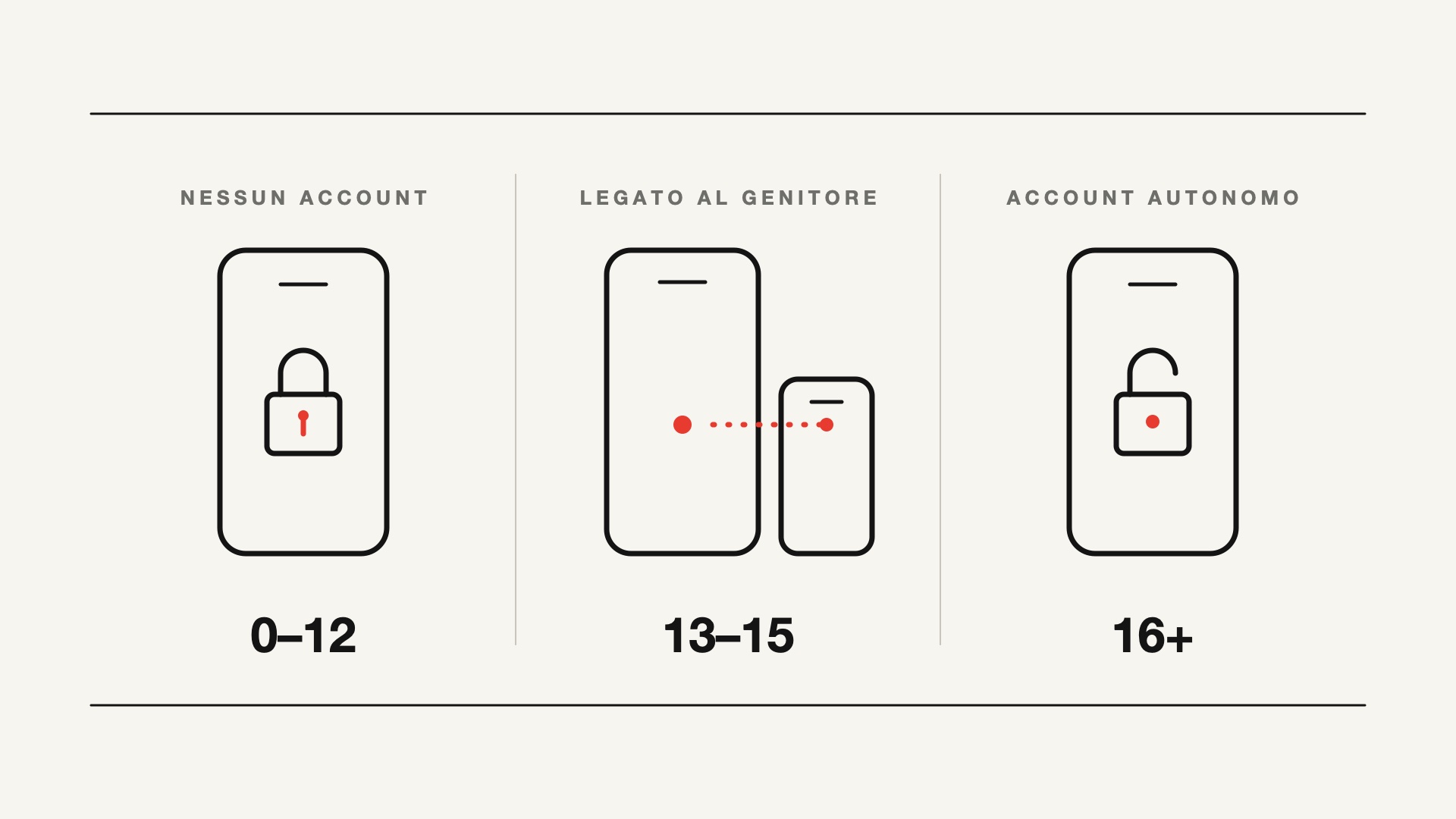
On 18 November 2026 Italy's governing majority announced an amendment to the security decree. No social media under 13. From 13 to 16, only an account linked to a parent's. From 16, an account of one's own.
A note on method. As I write, the text of the amendment is not yet public. I am working from press reports and from the official sources listed below. When the text is filed, I will update this piece.
What the amendment provides
The vehicle is Decree-Law No 190 of 22 October 2026 on public security and juvenile crime, before the Justice Committee of the Chamber of Deputies as bill No 3159. According to Corriere della Sera, the rule would become Article 7-bis of the conversion law.
According to the reports:
- under 13, the ban is absolute;
- between 13 and 16, only an account linked to a parent's is allowed;
- age verification is the platforms' responsibility;
- Agcom, the communications regulator, has nine months to define the technical solution;
- the sanction is blocking the site or platform;
- non-profit online encyclopaedias, educational archives and services, open-source software development platforms, scientific research services and systems run by public authorities are excluded.
What changes compared with today
Italy currently has no statutory minimum age for a social media profile. There are two rules, often confused.
The first concerns personal data. Article 8 GDPR sets 16 as the age at which a minor can consent alone to the processing of their data online, and lets Member States go as low as 13. Italy chose 14 (Article 2-quinquies of the Privacy Code). It is the age of consent, not the age of access.
The second is contractual. Platforms require 13 in their terms of service. They check it with a self-declared date of birth. That is, they do not check it.
The amendment would turn 13 into a statutory ban and move autonomy from 14 to 16.
First obstacle: the Constitution
A decree-law lapses unless converted within 60 days. Here the deadline is 21 December 2026. That explains the hurry.
But the Constitutional Court, in judgments No 22 of 2012 and No 32 of 2014, held that provisions added at the conversion stage must be homogeneous with the decree. Decree 190 deals with public order and juvenile crime. Regulating every minor's access to a digital service is something else: the link can be argued, but it is not certain to hold.
Second obstacle: notification to Brussels
This is the most serious obstacle, and the least discussed.
Directive (EU) 2015/1535 requires Member States to communicate to the Commission any draft rule on online services before adopting it, and to wait. Three months as a rule (Article 6(1)). Twelve months if the Commission finds that the draft concerns a matter covered by a proposal for a regulation already presented to Parliament and Council (Article 6(4)).
That proposal exists: the EU KIDS Act, presented on 17 September 2026. On 29 October the Commission's spokesperson announced a 12-month postponement for national drafts overlapping with the future common rules.
The Italian sponsors argue that Italy is safe, because bill No 1136 was notified in 2025. The notification exists: it is recorded in the Commission's TRIS system (communication TRIS/(2025) 1241) and provided for access to social media only from 15. There are, however, two problems.
The text has changed. That bill provided a single threshold at 15. The amendment has three bands and goes up to 16. Article 5(1) of the Directive requires a new communication when changes alter the scope or make requirements stricter.
An unnotified rule cannot be enforced against private parties. The Court of Justice has said so since 1996 (CIA Security, C-194/94) and confirmed it in 2000 (Unilever, C-443/98). In practice, a platform could decline to apply the rule and raise the defect before a court.
There is an exception. Article 6(7) exempts from the waiting period service rules adopted for urgent reasons of public policy, "notably the protection of minors". But it requires a "serious and unforeseeable" situation and rules that must take effect immediately. It is hard to call unforeseeable an issue Parliament has debated since 2024, or immediate a rule that defers to Agcom for nine months.
Third obstacle: the country of origin
The large platforms are established in other Member States, mostly Ireland. The e-Commerce Directive (2000/31/EC, Article 3) entrusts their regulation to the State of establishment.
In its judgment of 9 November 2023 (C-376/22, Google Ireland and Others), arising from an Austrian law, the Court of Justice made clear that a Member State may not impose general and abstract obligations on a category of providers established in another Member State. Derogations apply to measures taken case by case.
A national ban by age band is a general and abstract measure. France, in its latest notification, argues that the Commission's guidelines on Article 28 of the Digital Services Act leave room for a national minimum age. It is a serious argument. It has not yet been tested before the Court.
What Europe proposes
The KIDS Act has the same banded architecture, with a different threshold:
- under 13, no access to social media;
- at 13 and 14, a "mini account" set up by the parent, with limited contacts and at most one hour a day;
- from 15, an autonomous account.
Rome says 16, Brussels 15. Negotiations are open: on 26 November 2025 the European Parliament had called for 16, with access between 13 and 16 only with parental consent. Whatever the final number, an EU regulation will prevail over national rules.
The most important part of the KIDS Act, however, is not the threshold. It is the reversal of the burden of proof: platforms must show that the service is safe by design. And the prohibitions target features: infinite scroll without stopping points, night-time notifications, profiling-based recommendations.
What is happening elsewhere
Australia. First in the world: a ban under 16 since 10 December 2025. No penalties for children or parents, only for platforms. The eSafety regulator reported that 4.7 million accounts had been removed or restricted by mid-December. But according to the three-month evaluation published by eSafety, the share of under-16s with an account fell from 52.4% to 42.1%, and the share using social media only from 85.9% to 81.5%. Fewer accounts, almost the same use.
France. Parliament passed the under-15 ban on 21 July 2026. On 14 August the Conseil constitutionnel struck it down (Decision No 2026-911 DC). It accepted that protecting minors justifies limits. It rejected the method: a general ban, identical for all services, regardless of the features that create the risk, the minor's maturity or the role of parents. And it found that the law forced everyone, adults included, to prove their age without setting conditions and limits. The government rewrote the text and notified it to Brussels on 14 September: it now targets only services with high-risk features and lets parents lift the ban between 13 and 15.
Greece. Parliament approved an under-15 ban on 23 October 2026, in force from 1 January 2027.
Portugal. In February 2026 Parliament approved at first reading a scheme close to the Italian one: ban under 13, parental consent between 13 and 16. I found no confirmation of final adoption.
Austria. The under-14 ban was halted by the EU postponement. According to Der Standard it had not yet been voted by Parliament and cannot enter into force before July 2027.
United Kingdom. On 15 June 2026 the government announced an under-16 ban, to be implemented by regulations under the Children's Wellbeing and Schools Act 2026. The government points to spring 2027.
Malaysia. The Child Protection Code, in force since 1 June 2026, bans account registration under 16 and requires age verification.
Indonesia. Ministerial Regulation No 9 of 2026, implementing Government Regulation No 17 of 2025, has applied since 28 March 2026: on high-risk platforms, under-16 accounts must be deactivated.
Two clarifications on what is circulating these days. The KIDS Act dates from 17 September, not late October: what came in late October was the postponement of national laws. And no EU country has a ban in force today.
The missing point
The whole debate revolves around a number. Thirteen, fourteen, fifteen, sixteen.
The number is the least important part. A teenager aged 16 and one day, facing an infinite scroll designed to keep them from stopping, is no freer than one aged 15.
The Conseil constitutionnel said it in legal terms: you cannot regulate access without looking at features. It is the same idea as Habeas Mentem. The problem is not the age at which you enter. It is how the place you enter is built.
Then there is age verification. To exclude minors you must verify everyone. Italy already has a model: for pornographic sites Agcom imposed "double anonymity". Whoever certifies your age does not know for which service, and the service does not know who you are. If the new rule does not start from there, we will trade the protection of children for the identification of everyone.
Three questions for reading the text
When the amendment is public, I will read it with three questions.
- How is age verified, and who sees the data while it happens?
- What happens to accounts that already exist?
- What, concretely, is asked of a parent, and with what tools?
If the law answers, we will have a rule. If it does not, we will have a number.
Personal reflection, not legal advice.